Choosing an electric water heater involves balancing energy efficiency, space, and hot water needs. The following five models represent a mix of tankless and mini-tank options well suited for American homes. Each product offers a distinct strength, from on‑demand performance and self‑modulating technology to compact designs ideal for tight spaces. The quick comparison table below highlights core attributes to help readers decide which model fits their household best.
| Product | Brand | Type | Notable Feature |
|---|---|---|---|
| Rheem 18kW Tankless Electric Water Heater | Rheem | Tankless | External digital thermostat with self-modulating power |
| EcoSmart ECO 11 Electric Tankless Water Heater | EcoSmart | Tankless | Patented self-modulating technology for energy efficiency |
| GE Appliances 10 Gallon Plug & Play Electric Water Heater | GE | Mini-tank | Easy 120V installation with compact footprint |
| Orbek 18kW Tankless Electric Water Heater | Orbek | Tankless | Up to 4.17 GPM with efficient operation |
| BOSCH Tronic 3000 T 2.5-Gallon Mini-Tank | BOSCH | Mini-tank | Under-sink point-of-use with high thermal efficiency |
Rheem 18kW Tankless Electric Water Heater
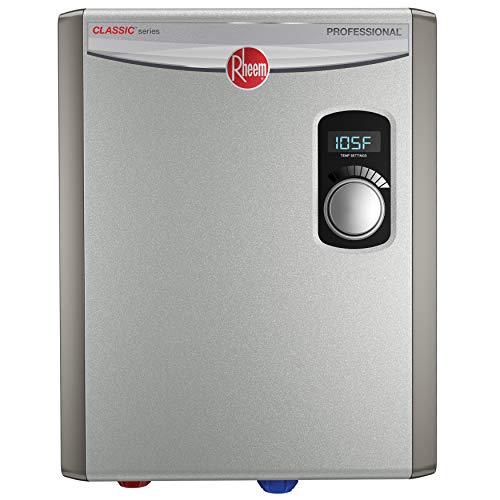
The Rheem 18kW model delivers on-demand hot water with an external digital thermostat that displays temperature to within one degree. It uses advanced self-modulation to adjust power to meet actual hot water demand, helping conserve energy during low-use periods. Durable copper immersion heating elements provide reliable performance, and the unit is field serviceable for maintenance. A maximum flow rate of up to 4.4 GPM makes it suitable for households with multiple fixtures needing hot water simultaneously.
Designed for privacy and efficiency, this unit emphasizes precise temperature control and rapid response to demand. It is especially effective in homes where hot water usage fluctuates, since the self-modulating technology minimizes energy in idle periods. Proper electrical capacity and safe installation are essential to maximize performance and longevity of the system.
EcoSmart ECO 11 Electric Tankless Water Heater

The EcoSmart ECO 11 provides endless on-demand hot water with continuous monitoring to keep the output within one degree of the selected temperature. The patented self-modulating technology adjusts amperage to match demand, supporting energy efficiency. It is designed to be compact and versatile, often installed on a wall or at the point of use, and is praised for its space-saving footprint and ease of installation. The unit is compatible with standard wiring and requires a suitable electrical circuit.
With a 54 A amperage draw, the ECO 11 emphasizes energy savings by heating water only when needed. EcoSmart highlights its efficiency with claims of high thermal efficiency and a small physical size (approximately 11.5 x 8 x 3.75 inches). Performance varies with incoming water temperature and demand, so matching the unit to typical household hot-water profiles is important for best results.
GE Appliances 10 Gallon Plug and Play Electric Water Heater
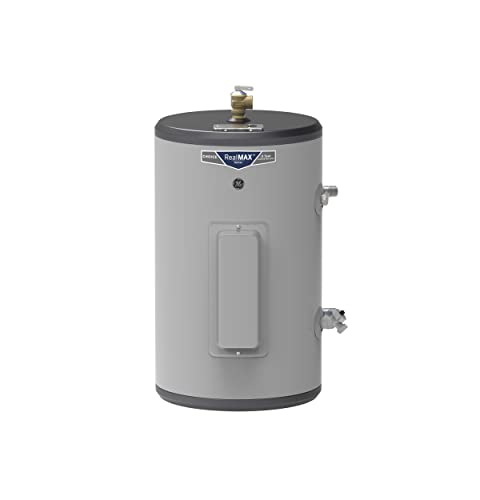
GE’s 10-gallon plug-and-play electric water heater focuses on easy installation and flexible placement. It uses standard 3/4-inch NPT water connections and connects to a 120-Volt supply, simplifying installation in kitchens, bathrooms, RVs, cabins, barns, garages, and other compact spaces. The unit emphasizes convenience and space savings while delivering reliable hot water on demand. A leading warranty provides eight years for replacement or eight years for the tank and parts, with one year of labor coverage.
The compact design makes this GE unit ideal for point-of-use applications or secondary heating in smaller homes. While it has a lower overall capacity than larger tankless models, its plug-and-play nature can reduce installation time and complexity for homeowners who need a quick hot-water solution in a limited space.
Orbek 18kW Tankless Electric Water Heater
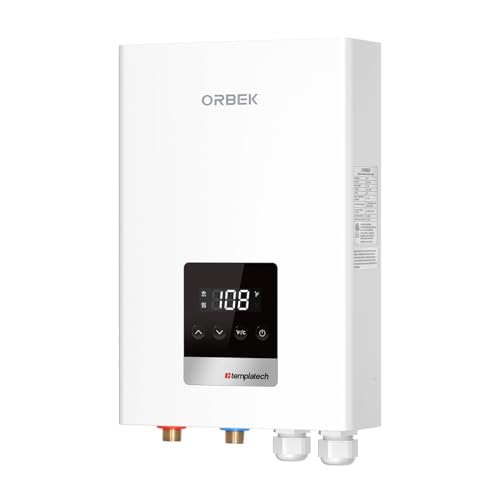
Orbek’s 18kW tankless model supports up to 4.17 GPM, delivering on-demand hot water to two or three fixtures simultaneously. It requires two 240V/40A two-pole breakers and a robust electrical service, with clear guidance on isolation and wiring. The unit emphasizes quick hot-water delivery—often within a few seconds—through a design that minimizes scale and corrosion via water-electricity separation. Temperature is adjustable in one-degree increments, providing precise control for varying household needs.
Designed for efficient operation in settings with variable inlet water temperatures, this heater’s performance depends on the home’s electrical capacity and water pressure. Prospective buyers should verify electrical service and panel capacity before installation to ensure reliable, continuous hot water supply.
ECOTINYMACH 110V Tankless Water Heater

The ECOTINYMACH 110V tankless water heater offers a compact 3000W solution with easy conversion between Fahrenheit and Celsius. Its compact footprint makes it suitable for under-sink installations or small apartments where space is at a premium. The heater emphasizes straightforward installation and quick hot-water delivery, making it a practical option for point-of-use applications where space constraints exist and a simple wiring setup is preferred.
As with all electric tankless units, performance depends on inlet water temperature and electrical capacity. The design prioritizes a simple user experience, with intuitive temperature control and a focus on rapid heating while maintaining energy efficiency.
BOSCH Tronic 3000 T 2.5-Gallon Mini-Tank
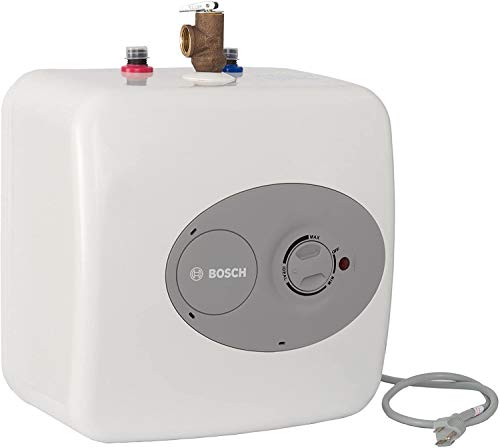
The BOSCH Tronic 3000 T is a 2.5-gallon mini-tank designed for point-of-use hot water. It fits under most sinks and offers a high thermal efficiency of 98 percent. With a 12-amp, 120-volt setup, it plugs into a standard outlet, enabling independent installation or integration with larger hot-water sources. The compact dimensions and easy placement make it a practical solution for streams requiring near-instant hot water at a single faucet or small appliance area.
Mounting flexibility is a key advantage, as the unit can be shelf, wall, or floor mounted. Its small size does not compromise reliability, and the 2.5-gallon capacity is ideal for occasional-use scenarios, kitchens, or bathrooms where only a small amount of hot water is needed at a time.
Buying Guide
Key purchase considerations
Choosing between tankless and mini-tank electric water heaters hinges on your hot-water needs, space, and existing electrical capacity. Tankless models deliver continuous hot water and can save space, but they require adequate electrical service and proper sizing for your peak demand. Mini-tank units are compact and easy to install, offering immediate hot water at a point of use, but they store only a limited amount of heated water. Understanding flow rates, temperatures, and expected usage is essential before purchasing.
Electric requirements and safety
Electric tankless heaters draw significant current, often requiring dedicated circuits and robust panel capacity. Some models use self-modulating technology to optimize energy use, but electrical readiness remains critical for performance and safety. Mini-tanks run on standard 120V circuits, which simplifies installation but limits overall hot-water capacity. Ensure proper grounding, venting (where applicable), and adherence to local electrical codes during installation.
Sizing, flow, and climate considerations
Tankless units are sized by their maximum flow rate (GPM) and the temperature rise they can achieve. Cold climates or low inlet water temperatures reduce the unit’s effective GPM, so higher-capacity models may be necessary for multiple fixtures. Mini-tanks are sized by their first-hour rating and storage capacity, suiting low-demand scenarios. Assess your household’s hot-water usage patterns to pick a model that meets peak demand without waste.
Space, installation, and maintenance
Tankless systems save space and can be wall-mounted, which is advantageous in compact spaces. Some units are designed for easy field service and modular installation. Mini-tanks are easier to install and require less space but may need more frequent replacements if hot water demand grows. Regular maintenance—such as flushing to remove mineral buildup—extends unit life for both types.
Energy efficiency, warranties, and long-term value
Energy-efficient models reduce operating costs, especially in homes with high hot-water usage. Self-modulating technology helps preserve energy by adjusting output to demand. Warranties vary, with long-term coverage on many units for tanks and components. Consider total cost of ownership, including installation, maintenance, and potential electrical upgrades, to estimate long-term value.
In summary, the best choice depends on your specific needs: continuous on-demand hot water with higher initial electrical requirements (tankless) or a compact, straightforward, point-of-use solution (mini-tank). Evaluate your space, electrical capacity, typical hot-water demand, and budget to determine which model offers the most practical balance of performance and efficiency for your home.