Cedar siding brings natural warmth and texture to homes, but its beauty fades without proper protection. Solid color stains offer long-lasting color with a protective seal, helping cedar resist UV damage, moisture, and mildew while concealing natural grain for a uniform look. This guide highlights five top solid-color cedar stains from trusted brands, focusing on durability, ease of application, drying and recoat times, and suitability for exterior cedar projects. Read on to compare finishes, coverage, and performance to pick the right product for your siding, decks, or fences.
| Product | Brand | Shade / Color | Finish |
|---|---|---|---|
| SaverSystems Deck Premium Solid Color Stain | SaverSystems | Light Walnut | Solid Color |
| BEHR Premium Cedar Naturaltone Solid Color | BEHR Premium | Cedar Naturaltone | Solid Color |
| Flood Cedar Solid Pro Exterior Wood Stain | Flood | Cedar | Solid Color |
| Thompson’s WaterSeal Solid Color Stain | Thompson’s | Natural Cedar | Solid Color |
| Cabot Semi-Solid Stain + Sealer | Cabot | New Cedar | Semi-Solid Color |
SaverSystems Deck Premium Solid Color Stain Light Walnut

The SaverSystems deck stain is marketed as a premium solid color solution designed to provide complete coverage with an opaque finish that hides wood grain while protecting against fading, graying, peeling, and mildew. The solid color formula creates a uniform appearance across cedar siding, which is beneficial for homes with weathered surfaces or varying plank tones. The product is water-based, offering ease of cleanup and low odor compared to traditional oil-based stains. It also emphasizes UV resistance and durable color retention, helping cedar maintain a fresh look year after year. Application can typically be done with brush, roller, or sprayer, enabling consistent results on larger exterior surfaces. Drying times and recoat windows support flexible scheduling, making it suitable for mid-to-large cedar projects. This option suits homeowners seeking a long-lasting, low-maintenance finish that preserves the cedar’s natural warmth while delivering a modern, uniform appearance.
BEHR Premium Cedar Naturaltone Solid Color
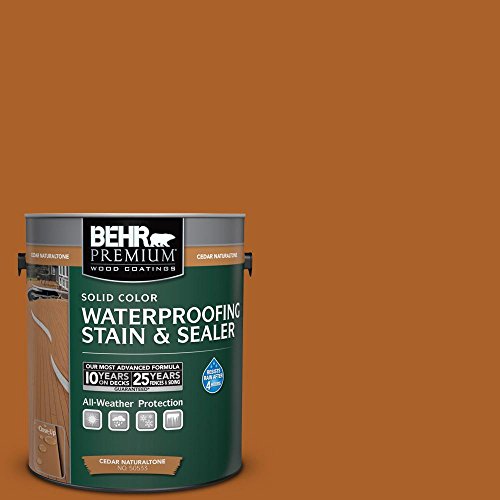
The BEHR Premium Cedar Naturaltone Solid Color is designed to deliver an even, opaque finish that significantly reduces the visibility of the wood grain on cedar siding. As a solid color stain and sealer, it offers robust protection against water intrusion and UV exposure, helping to reduce color fading and weathering. The formula is typically water-based or low-VOC to support easier cleanup and a lower environmental impact, while providing a durable film that resists cracking and peeling. This product is well-suited for homeowners who want a dependable, uniform color with straightforward maintenance. Expect a cohesive cedar exterior with minimal brush marks and a smooth, consistent surface after application.
Flood Cedar Solid Pro Exterior Wood Stain

Flood’s Cedar Solid Pro Exterior Wood Stain provides a durable, opaque coating designed to protect cedar against moisture and UV damage. The product’s 100% acrylic formula emphasizes strong adhesion and resistance to cracking and peeling, making it a practical choice for cedar siding exposed to variable climates. The solvent system is typically formulated to offer weather resistance and a solid finish that hides grain while maintaining a clean, uniform color. The finish is described as rain-resistant within a short period after application, and it is suitable for application across a wide temperature range, increasing flexibility for exterior projects in diverse regions.
Thompson’s WaterSeal Solid Color Cedar Stain

Thompson’s WaterSeal Solid Color Waterproofing Wood Stain offers a solid finish designed to protect outdoor wood surfaces while enhancing color without masking texture entirely. The solid color helps to hide grain and minor surface flaws while applying a protective layer against water damage. The product emphasizes fade resistance and UV protection, helping the cedar maintain its appearance over time. It is positioned as an easy-to-apply deck and siding sealer, suitable for homeowners who want a one-coat finish that delivers color fast and provides durable moisture protection. Be mindful of recoat intervals based on climate and wear.
Cabot Semi-Solid Cedar Wood Stain

Cabot’s Semi-Solid Wood Stain + Sealer combines color with protective resin-based chemistry to deliver a semi-solid finish. This option aims to balance hiding some wood grain with letting the wood texture show through, creating a richer, more uniform tone with more depth than a fully transparent stain. The formula is designed to form a weather-resistant barrier and protect cedar against moisture, mildew, and UV damage. The stain is described as easy to apply with a smooth finish that minimizes visible brush strokes and reduces lapping or streaks. It’s suitable for homeowners who want a stronger, longer-lasting color with good grain concealment.
Buying Guide
Key purchase considerations
When selecting a solid color stain for cedar siding, consider whether you prefer oil-based or water-based formulations. Oil-based stains typically offer deeper penetration and longer durability but require solvents for cleanup and may have stronger odors. Water-based stains tend to dry faster, emit fewer VOCs, and clean up with soap and water, making them popular for family-friendly projects and tighter indoor-outdoor transitions. For cedar, a solid color stain should provide robust UV protection, water resistance, and mildew resistance to keep siding looking uniform and fresh for years. Look for products that mention fade resistance, UV blockers, and mold resistance to ensure long-term performance.
Finish, color retention, and grain concealment
Solid color stains intentionally obscure much of the natural grain to deliver a uniform look. If you prefer a bolder, opaque appearance, choose products explicitly labeled as solid color. If you want to retain some grain texture while still achieving a uniform color, consider semi-solid or semi-opaque options. In cedar, color retention is important due to sun exposure; select products with fade-resistant formulations and UV inhibitors to minimize color shift over time. Light-to-medium cedar tones tend to pair well with natural surroundings, while deeper browns or grays can emphasize architectural lines and create a contemporary contrast.
Application and drying times
Application method matters for achieving even color—brush or roller works well for small areas, while spray applications can save time on large siding runs. Some brands permit spraying, but back-brushing or rolling may be recommended to ensure even penetration and to avoid lap marks. Drying and recoat times vary by product and climate. In cooler or damp conditions, drying can be slower, extending maintenance windows. Ensure temperatures are within the product’s recommended range and plan for adequate ventilation. Surface preparation, including cleaning and removing mildew, will improve adhesion and color uniformity.
Durability, maintenance, and recoat cycles
Solid color stains are designed to resist peeling, cracking, and mildew. For cedar siding, expect maintenance cycles every 3–7 years, depending on climate, sun exposure, and the product’s durability. Water-based options usually require less maintenance in humid regions, while oil-based formulas may offer longer intervals between coats in harsh sun. When approaching a recoat, clean and dry the surface thoroughly and reapply the stain following label directions. Siding that experiences frequent moisture or heavy shade may benefit from quicker maintenance cycles to preserve color integrity and protective film.
Coverage and environmental considerations
Coverage varies by product and wood porosity; consider the approximate square footage of cedar siding and plan for extra material to account for touch-ups. If indoor odors or solvent exposure is a concern, choose low-VOC or VOC-compliant formulas. For larger projects, value-driven options like one-coat systems or paints with built-in sealers can reduce labor costs and application time. Finally, verify compatibility with existing finishes—some solid color stains can be applied over previously adhered solid stains, while others require light sanding or surface preparation to ensure proper adhesion.