Choosing the right paint for brick interiors means balancing aesthetics, durability, and ease of use. Brick’s porous, textured surface absorbs paint differently than smooth drywall, so finishes vary from breathable limewash to modern latex coatings and all-in-one paints. This guide highlights five popular Amazon options that work well on brick walls or fireplaces inside American homes. Each product is described with its finish, typical applications, and practical tips for clean, long-lasting results. Whether you want a classic whitewashed look, a rustic patina, or a durable, wipeable surface, these choices cover a range of styles and budgets.
| Product | Brand | Key Finish / Note |
|---|---|---|
| Giani Whitewash Brick Transformations | Giani | Whitewash; 200 sq ft coverage; Dilute with water; Low odor/VOCs |
| GLAINTE Brick Transformation Paint | GLAINTE | Direct-to-brick; Mixed 1:1 or 1:2; Indoor/outdoor; Low-VOC |
| Romabio Limewash | Romabio | Slaked-lime; One coat; Breathable; Distinct patina |
| Rust-Oleum Concrete Interior Wall Paint | Rust-Oleum | Concrete look; Water-based; 30 sq ft/qt; Quick dry |
| THE ONE All-in-One Paint & Primer | THE ONE | Paint & Primer in one; Multi-surface; Durable |
Giani Whitewash Brick Transformations

Giani Whitewash Brick Transformations provides a light, airy brick refinishing option for interior spaces. The kit is designed for brick walls and fireplaces, with a careful dilution requirement to achieve full coverage—up to 200 square feet. The finish aims for a subtle whitewashed look and is marketed as safe with low odor and reduced VOCs, appealing for living rooms, dens, and home studios where ventilation can be limited. The product emphasizes a traditional, breathable appearance rather than a fully opaque solid color.
Application follows the Brick Transformations kit instructions or the accompanying video. Begin with a clean, dry surface and apply evenly to reach the desired opacity. The look can be built up with additional passes for greater depth or kept light for a gentle wash. If you want to adjust brightness or texture, additional coats can be added while maintaining the same diluting approach. This option is best when you want a classic brick-backed character with a soft, finish that won’t overwhelm architectural detail.
GLAINTE Brick Transformation Paint
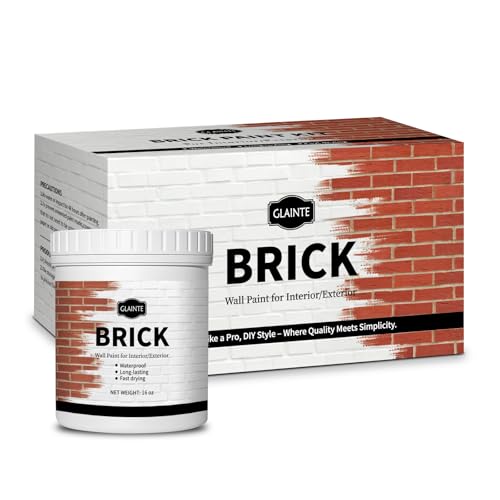
GLAINTE Brick Transformation Paint is a versatile white paint kit designed for brick, fireplaces, walls, and concrete, with indoor and outdoor use. It can be applied directly to a wide range of surfaces without priming and offers sun and waterproofing properties. The low-VOC, water-based formula makes it suitable for enclosed spaces, and opacity is controllable by dilution—1:1 for a light veil or 1:2 for a bolder, textured finish. The kit includes tools that support seamless layering and edge blending for authentic brick effects.
Best results come from layering with a cloth or brush to soften edges and mimic brick joints. Allow coats to dry between applications and avoid painting in rainy or highly humid conditions, especially while the finish is still curing. Surfaces should be clean and dry prior to application, and testing a small area first helps confirm color and texture before committing to a full room.
Romabio Limewash

Romabio Classico Limewash is an authentic slaked-lime paint designed for brick surfaces inside and outside. It is formulated to distress brick with a natural patina and is marketed as “bio-logical,” evoking organic and traditional materials. The product is described as suitable for one-coat applications in many cases, producing a breathable finish with a historic feel. Its appearance can vary with brick porosity, offering a subtle, textured look that advances with age and exposure, rather than a uniform, synthetic color.
Because limewash relies on lime chemistry, expect color and texture variation as bricks absorb moisture differently. Limewash is breathable, which helps with moisture management but may require longer cure times and more careful moisture considerations than latex-based paints. The 2.5-liter size provides substantial coverage for larger walls or fireplaces, making it a strong choice for historic or rustic interiors where patina matters.
Rust-Oleum Concrete Interior

Rust-Oleum Concrete Interior Wall Paint delivers a concrete-inspired finish for interior walls, offering a modern, textured look on brick or other masonry surfaces. The water-based formula is designed for interior use and dries to the touch in about 30 minutes, supporting quicker project turnover. Coverage is approximately 30 square feet per quart, making it suitable for feature walls or accent areas where a durable, wipeable surface is desired. This option works well when a contemporary, industrial aesthetic complements brick interiors.
For brick applications, ensure the surface is properly prepared and primed if needed. Apply with a roller or brush, and layer as required to achieve the desired concrete texture. Because it is a specialty finish, testing on a small patch helps predict how the final look will read on your brick and how it will wear with cleaning and daily use.
THE ONE All-in-One Paint & Primer

THE ONE All-in-One Paint & Primer is a versatile option for brick interiors, combining primer and paint in a single product. It supports multiple surfaces—furniture, cabinets, front doors, walls, and more—including brick. The formula is designed for fast drying, with durable performance and reduced prep work due to its built-in primer. The one-liter size offers substantial coverage and is suitable for projects that require a strong, wipeable finish in interior or exterior settings. This product is especially convenient for homeowners seeking a streamlined approach to brick refinishing.
Because THE ONE is a multi-surface product, performance can vary by substrate. It is advisable to test a small brick patch to verify color, opacity, and adhesion before committing to a full room. Its thick, durable formulation supports longer-lasting results while simplifying the painting workflow, particularly in spaces where time and prep are limited.
Buying Guide
Finish Look And Authenticity
- Whitewash and limewash deliver breathable, rustic looks that emphasize brick texture and patina. They look most authentic on historic or rustic spaces.
- Latex or acrylic-based paints provide a modern, wipeable surface with strong color in a single coat, often at the expense of texture depth.
Surface Preparation
- Brick surfaces should be clean and dry before painting. Some products require no priming, while others benefit from a compatible primer for adhesion and durability.
- Test a small patch first to confirm how the finish reads on your brick and to gauge the required number of coats.
Durability, Odor, And VOCs
- Water-based formulas typically offer lower odor and VOCs, aiding indoor use, especially in occupied living spaces. Limewash finishes are breathable and may require maintenance but have their own durability characteristics.
- Consider the room’s usage: kitchens, entryways, and fireplaces may benefit from more durable, wipeable finishes.
Coverage And Application
- Check coverage per unit (gallon or liter) and plan for multiple coats if color depth or texture is desired. Some finishes require dilution to achieve the preferred opacity.
- Use appropriate tools—brushes, sponges, or rollers—and follow recommended drying times between coats to minimize lap marks.
Maintenance And Longevity
- Breathable limewash finishes may require reapplication over time to refresh color and patina, while solid paints typically offer longer intervals between touch-ups. Choose based on desired maintenance level and look.
- For brick interiors, wipeable finishes are easier to clean in high-traffic areas, whereas lighter washes emphasize texture and may show dirt more readily.