Wood countertops benefit from regular conditioning to maintain luster and resist drying. The right oil or finish can deepen color, seal pores, and provide a food-safe barrier for daily kitchen use. This guide reviews five highly-rated oils and finishes from trusted brands to help American households choose the best oil for wood countertops.
Below is a quick summary table of the five products, highlighting type and size to compare at a glance.
| Product | Brand | Type | Size | Key Benefit |
|---|---|---|---|---|
| Thirteen Chefs Mineral Oil | Thirteen Chefs | Mineral Oil | 12 oz | Food-grade; protects against drying |
| HOPE’S Tung Oil (16 oz) | HOPE’S | Tung Oil | 16 oz | Deep penetration; long-lasting finish |
| Howard Block Butcher Block Conditioner | HOWARD | Oil & Wax Conditioner | 12 Fl Oz | Beeswax-protected moisture retention |
| Howard Food Grade Mineral Oil | HOWARD | Mineral Oil | 12 oz | Colorless, tasteless; versatile use |
| Kate Naturals Mineral Oil | Kate Naturals | Mineral Oil | 8 oz | Food-safe; ideal for boards and countertops |
Thirteen Chefs Mineral Oil

Thirteen Chefs Mineral Oil is a 100% food-grade mineral oil designed for cutting boards, countertops, and butcher blocks. It is colorless, odorless, tasteless, and gluten-free, meeting food-safety standards while remaining neutral to wood tones. The oil protects by preventing drying and cracking and can help restore moisture to worn surfaces. Its push-applicator cap and squeeze-bottle design simplify maintenance, enabling a generous application with a rag or by hand. After applying, allow the oil to sit for about four hours to penetrate. This product is well-suited for routine upkeep and for reviving dull surfaces without altering the wood’s natural hue.
For kitchen tools and surfaces exposed to daily use, Thirteen Chefs Mineral Oil offers a straightforward, reliable option. While it does not create a hard resin film, it replenishes natural oils to prevent grain separation and minor wear. Regular applications every few weeks or months, depending on use, keep countertops looking refreshed. This oil is compatible with many existing finishes, making it a versatile addition to any wood-care routine. It pairs nicely with wax finishes when extra moisture sealing is desired, especially on porous countertops.
HOPE’S Tung Oil

HOPE’S 100% Pure Tung Oil is a natural finish known for deep penetration and a hand-rubbed appearance. Craftsmen favor tung oil because it permeates wood fibers rather than forming a surface film. As it cures at room temperature, the finish becomes part of the wood, delivering a flexible, non-oily solid that stands up to moisture, alcohol, oil, and daily wear. Tung oil typically lasts significantly longer than mineral oil or wax-based products, making it a durable choice for busy kitchens or tables subject to frequent use. The application is simple: wipe on and allow it to cure naturally, with multiple coats for richer protection.
One advantage of tung oil is its ability to enhance wood warmth and depth without masking grain. It works well on a variety of hardwoods commonly used for countertops and cutting surfaces. For outdoor applications or areas with strong sunlight, consider UV-protective finishes or additional sealants. Tung oil can be re-applied on an as-needed basis, with light maintenance to refresh the luster and protect against moisture infiltration. Routine care helps preserve color and structural integrity over time.
Howard Butcher Block Conditioner

Howard Butcher Block Conditioner combines food-grade mineral oil with natural beeswax to provide a moisture-locking protective layer. This combination helps prevent drying and cracking while adding a protective wax barrier that resists moisture ingress. The product is designed for cutting boards, wooden utensils, and countertops, ensuring sanitary use on food-contact surfaces. Beeswax adds a durable seal that slows moisture loss between applications. Regular conditioning helps keep wood surfaces looking smooth and less prone to splitting, especially in dry climates or with frequent use.
Application is straightforward: apply a liberal coat, allow the oils to penetrate, and wipe away any excess. The blend of oil and wax makes it a long-lasting option that doesn’t require daily upkeep. For best results, follow a routine schedule based on wear and seasonality, particularly in kitchens with high humidity changes. This conditioner is a solid all-around choice for those seeking a barrier-enhancing finish that doubles as maintenance oil.
Howard Food Grade Mineral Oil
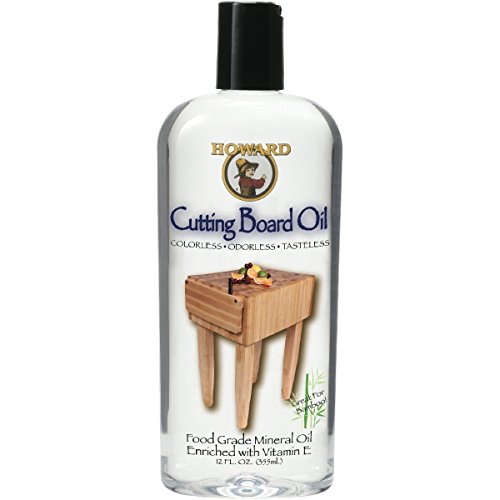
Howard Food Grade Mineral Oil is a 100% pure, colorless, tasteless mineral oil designed for wood cutting boards, butcher blocks, countertops, bowls, and utensils. This oil penetrates deep into wood pores, helping to prevent drying and cracking while preserving natural wood tones. Its versatility makes it a staple for many kitchens and wood care routines. The oil is neutral and safe for food-contact surfaces, ensuring minimal impact on flavors or aromas while maintaining wood integrity over time. It is commonly used as a general-purpose conditioner for a variety of wooden kitchen items.
The product’s simplicity is its strength: a straightforward, clean oil with broad compatibility. Regular reapplication keeps surfaces moisturized and more resistant to moisture-related damage. While mineral oil lacks the build of a film-forming finish, it remains a practical option for those seeking a quick, reliable maintenance step without introducing waxes or varnishes. For best results, pair with gentle cleaning and drying routines to extend intervals between reapplications.
Kate Naturals Mineral Oil

Kate Naturals Mineral Oil is a food-safe mineral oil designed for wood cutting boards, butcher blocks, and countertops. It is unscented, colorless, and odorless, making it a neutral conditioner that preserves the natural beauty of wood without adding fragrance or tint. The oil helps refresh cutting boards and protect wooden countertops by preventing cracks and splits. It’s also noted for compatibility with utensils and blades, helping minimize rust on metal components when used as part of routine upkeep. This oil is a compact option for smaller boards and surfaces needing quick maintenance.
Kate Naturals emphasizes a simple, unscented formula suitable for households that favor a light touch. Regular applications keep grain fibers hydrated and reduce surface dryness. While it provides excellent baseline conditioning, users seeking a harder protective film might opt for tung or wax-based products. For marble or stone countertops, mineral oil can be a safe, non-reactive maintenance choice, though stone-specific sealants may offer different performance profiles.
Buying Guide
Oil Type And Finish
Mineral oils are penetrating conditioners that replenish natural oils without forming a hard film. They are easy to apply and excellent for cutting boards and countertops that see frequent contact with food. Tung oil penetrates deeply and cures to a flexible, durable finish that resists moisture and wear, but it can alter wood tone slightly and requires proper curing time. Conditioner-and-wax blends add a protective barrier but may need periodic reapplication as wax wears away. Choosing between these options depends on how you value ease of use, finish durability, and whether you prefer a matte or slightly richer wood appearance.
Food-Safety And FDA Considerations
When countertops double as food-contact surfaces, look for food-grade or FDA-compliant formulas. Mineral oil products labeled as food-grade are designed for boards and utensils and typically contain no fragrances or color additives. Tung oil can be used safely on food-prep surfaces when fully cured, but it may require longer cure times and occasional maintenance. Always review product labels to confirm suitability for kitchen surfaces and ensure there are no additives that might affect flavors or aromas.
Application And Maintenance
Most oils require a simple routine: clean the surface, apply a generous layer, wait for absorption, and wipe off excess. Mineral oils generally require more frequent reapplication, especially in high-traffic kitchens or dry environments. Tung oil typically needs multiple coats with cure times in between, offering longer intervals between maintenance once cured. Wax-containing conditioners provide a protective seal but may feel tacky to touch until fully cured. Develop a maintenance plan based on usage, environment, and the wood’s porosity to maintain optimal results.
Durability And Re-Coating Frequency
Film-forming finishes or wax blends tend to offer longer-lasting protection against moisture and wear, but may alter the wood’s appearance. Penetrating oils like mineral oil and tung oil maintain a natural look, with tung oil offering stronger resistance after curing. In busy kitchens, expect mineral oil to require more frequent reapplication (every few weeks to months) compared with tung oil, which can last longer between coatings after several applications. Factor in climate, humidity, and surface porosity when planning re-coating schedules.
Brand And Formulation Considerations
Brand reputation matters for consistency in finish and safety. Reputable brands provide clear labeling about food safety, cure times, and recommended substrates (cutting boards, countertops, utensils). Some retailers offer oil-and-wax blends that simplify maintenance, while others specialize in pure oils for deeper finishes. Consider whether you prefer a simple mineral oil, a durable tung oil finish, or a conditioner that includes protective waxes. Availability and price can also influence long-term maintenance planning.