For seniors and others needing easier sit-to-stand assistance, elevated chairs and stand-alone aids can make daily tasks safer and more comfortable. This article highlights five of the most relevant options that blend stability, ease of use, and practical features. Each product is designed to help with rising from chairs, couches, or toilets, and many offer adjustable heights or supportive arms. Below, you’ll find a snapshot table and detailed sections to help compare styles, materials, and intended uses.
| Product | Brand | Key Feature |
|---|---|---|
| Adjustable Height Stool with Back and Arms | Drive Medical | Height-adjustable legs; removable arms; angled seat |
| Raised Toilet Seat With Handles | HOMLAND | Adjustable height & width; solid stability; 400 lb capacity |
| Recliner Cushions for Elderly | HAVARGO | Dual-layer booster cushion; increases seat height |
| Stand Assist Rail For Couch / Chair | NIMOOD | Adjustable arms; supports up to 300 lb; ergonomic handles |
| Vive Stand Assist | Vive | Adjustable, portable, supports up to 300 lb |
These products cover a range of needs—from simple height elevation to full stand-assist systems. When choosing, consider the user’s height, weight capacity, how the device integrates with existing furniture, and whether you need portability or fixed installation. The sections below summarize each option’s strengths and typical use cases to help you decide what best fits a home environment.
Drive Medical Adjustable Height Stool With Back And Arms
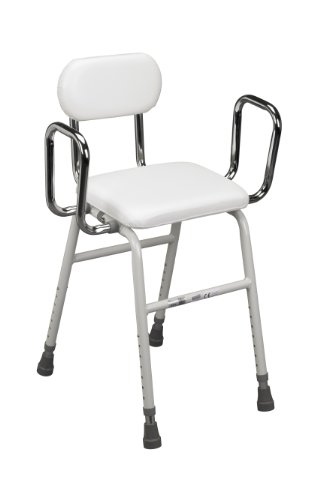
The Drive Medical 12455 adjustable height stool is designed for flexible use across daily activities. It features push-button height adjustment and width-adjustable, removable arms, enabling customized seating with a stable framework. The angled seat is intended to ease sitting and standing transitions, which is especially helpful for elderly users recovering from surgery or managing mobility limitations. With multiple practical uses—from kitchen tasks to bedside seating—this model emphasizes versatility while preserving a compact footprint suitable for small spaces.
HOMLAND Raised Toilet Seat With Handles

The HOMLAND raised toilet seat offers adjustable height and width with a strong 400 lb weight capacity. Its four support legs and outward-tilting design enhance stability, while rubber feet reduce slipping on bathroom floors. This model is FSA/HSA eligible, adding potential financial flexibility for users who qualify. The combination of a sturdy aluminum seat riser and stable base aims to improve safety during transfers to and from the toilet, a common daily challenge for elderly individuals.
HAVARGO Recliner Cushions For Elderly

The HAVARGO recliner cushions provide a dual-layer booster that increases seat height by 3–4 inches, making standing up easier for shorter users or those with limited leg strength. The cushion combines a soft memory-foam top layer with a denser bottom layer for balanced support. A non-slip bottom helps prevent movement on recliner surfaces, sofas, or chairs, contributing to safer posture and reduced effort when transitioning from sitting to standing. This option is particularly useful for extended seating periods in living rooms or reading nooks.
NIMOOD L1 Stand Assist Rail
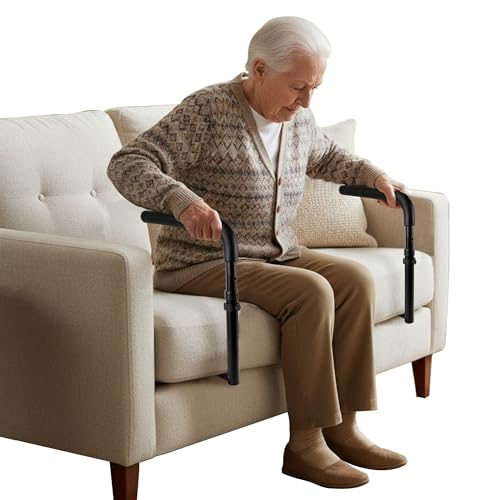
The NIMOOD L1 Stand Assist Rail is a flexible support system designed to help users rise from chairs or sofas with minimal effort. It features adjustable width and height to fit various furniture sizes and cushions, and a robust construction that supports up to 300 pounds. The design emphasizes a secure grip and stable leverage, thanks to dual ergonomic handles and a flat-tube base that hugs furniture to minimize slippage. It is suited for living areas where furniture-coupled assistance is preferred over freestanding devices.
Vive Stand Assist — Mobility Standing Aid Rail

The Vive Stand Assist is a portable, adjustable standing aid designed to help users rise from chairs, sofas, and recliners with greater stability. The dual-handled design provides a secure grip, reducing twisting and the risk of falls. Easy to install around cushions, the device suits a variety of furniture without permanent modifications. Its aluminum frame supports up to 300 pounds and offers a discreet profile that blends with most home décors, making it a practical option for shared living spaces or temporary use in different rooms.
Buying Guide: Key Purchase Considerations
When selecting an elevated seating or stand-assist solution, consider the following factors to align with safety, comfort, and lifestyle needs:
- Weight capacity: Confirm the user’s weight and choose a model rated above that value for a safety margin.
- Height and width adjustability: Select products with adjustable dimensions to fit furniture and user height, ensuring comfortable standing posture.
- Ease of use: Look for simple mechanisms (easy-to-push buttons, non-slip surfaces) that reduce the effort required for transfers.
- Stability features: Prioritize anti-slip bases, wide supports, and secure grip handles to minimize movement during use.
- Portability vs. permanence: Decide whether you need a portable solution for multi-room use or a fixed addition to one seating area.
- Primary environment: Bathroom-specific products should emphasize slip resistance and moisture tolerance; living room options should prioritize comfort and low-profile design.
- Maintenance and cleaning: Choose materials that are easy to wipe down and resistant to spills, especially in high-use areas.
- Budget and eligibility: If eligible, consider products with FSA/HSA options to offset costs.
- Safety certification: Check for certifications or safety ratings when available to ensure adherence to established standards.
These criteria help compare products across use-case scenarios—from kitchen stools to toilet risers and recliner boosters. For caregivers, matching the device to the user’s daily routines will maximize benefits and minimize risk. Always consult a clinician or physical therapist if you’re unsure about which option best supports independent mobility and safety in a home setting.