The right cubby system helps preschool classrooms stay tidy, support independent routines, and encourage responsibility among young learners. This guide highlights durable, multi-compartment cubbies designed for daily use in daycare, nursery, and early-education settings. Each section explains what to look for and how the featured products align with classroom needs, from easy access for kids to anti-tip safety features for active spaces. A quick buying table follows to help compare options at a glance.
| Product | Key Benefit | Ideal For |
|---|---|---|
| Kikihouse 5-Section Coat Locker | 5 open coat areas, 10 hooks, acrylic name tags | Small classrooms, home-use playrooms |
| Garvee 5-Section Coat Locker | Five storage spaces, anti-tip kit | Dense traffic classrooms, active classrooms |
| Kikihouse 10-Section Coat Locker | 10 compartments, 20 hooks, mirror option | Medium to large groups, multi-item storage |
| ECR4Kids 5-Compartment Mobile Storage | Mobile design, kid-friendly reach, durable finish | Classrooms needing flexible, movable storage |
| Premium Innovations 10-Section Cubbies | 10 open spaces, 20 hooks, long-lasting build | Daycare, playschool, or preschool programs |
Kikihouse 5-Section Classroom Coat Locker

This 5-section coat locker provides a compact yet practical storage solution for early classrooms. It features five open coat storage areas, ten hooks, and ten compartments, along with a raised bottom to keep boots and rain gear off the floor. Thickened planks reinforce the frame for daily use, while acrylic name tags offer easy space differentiation, helping students learn to manage their shared areas and personal belongings. The unit supports organized behavior by centralizing bags, clothes, and accessories in one accessible location.
Key considerations for this model include its size, suitability for small to mid-sized classrooms, and the practicality of built-in hooks versus shelf space. Its raised boot area minimizes mess and moisture on classroom floors, while the name tag option adds a personalized touch that helps assignments and storage be more predictable for children.
Garvee 5-Section Classroom Coat Locker

The Garvee unit emphasizes safety and stability with a heavy-duty anti-tip kit included. Five open storage areas, ten double coat hooks, and ten cubbies provide ample space for jackets, lunch boxes, and classroom supplies. The natural wood finish, protected by a clear lacquer, adds elegance while resisting daily wear. The anti-tip hardware, when properly installed, helps prevent tipping, which is a key consideration in classrooms with active children and moving furniture.
In choosing this design, teachers should weigh the balance between open cubby accessibility and the need for tip resistance. The unit’s aesthetic blends well with various interior styles, making it adaptable to different classrooms. Its finish helps maintain a polished look even with frequent use, and the system’s modular feel can complement other storage pieces in the room.
Kikihouse 10-Section Classroom Coat Locker
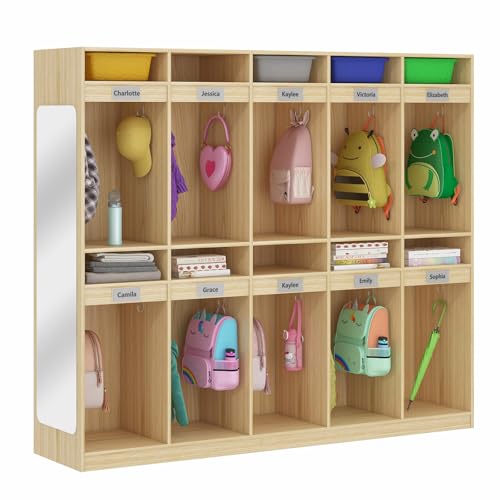
This model doubles the cubby count to ten and adds twenty hooks, with widened compartments for bulkier items. It also features an acrylic name tag area to help designate exclusive storage spaces, mirroring the multispace approach used in larger classrooms. The extra sections support larger groups or longer-term storage needs as children accumulate items throughout the day, simplifying routine transitions such as arrival, lunch, and outdoor play.
Considerations for deployment include the increased footprint versus classroom space, and the need for more wall or floor area to accommodate longer lockers. The added hooks per space reduce crowding and improve access, which is beneficial in group activities where multiple children store items simultaneously.
ECR4Kids 5-Compartment Mobile Storage Cabinet

The ECR4Kids cabinet emphasizes mobility and accessibility. Its five-compartment design is ideal for rooms that require frequent reorganization or reconfiguration for different activities. The unit is built for children’s reach, enabling them to independently retrieve materials and tidy away supplies, a core component of early educational practices. A durable finish protects the wood from daily use and helps maintain a neat classroom appearance over time.
When evaluating mobile storage, teachers should assess the ease of movement, the stability of wheels, and the height relative to students’ reach. This cabinet’s mobile nature supports flexible learning areas, allowing centers to shift quickly between small-group work and whole-class activities without requiring disruptive rearrangements.
Premium Innovations 10 Section Cubbies

Premium Innovations combines a large storage footprint with 20 double coat hooks and ten cubbies in a substantial unit designed for daycare and preschool settings. The product dimensions indicate a tall, wide structure that can handle a lot of outerwear, backpacks, lunch gear, and storage bins. The wooden storage unit is suitable for organized sections, with a focus on durability and long-term classroom use. Assembly is typically required.
Key considerations include the unit’s footprint and whether space allows for comfortable student movement around it. The multiple cubbies and hooks support varied organization schemas, enabling teachers to assign specific spaces for each child or class period. The natural wood finish aligns with traditional classroom aesthetics and can coordinate with other furniture pieces in the room.
Buying Guide
When selecting cubbies for a preschool classroom, consider these factors to ensure a practical, safe, and durable choice:
- Size and footprint: Match the unit to classroom dimensions, circulation space, and planned walkways. Consider vertical solutions for compact rooms.
- Access and reach: Ensure compartments are reachable by the children’s height, with clear labeling or name tags to support independence.
- Durability and finish: Opt for solid wood or high-quality plywood with protective finishes that resist daily wear, spills, and repeated cleaning.
- Safety features: Look for anti-tip kits, rounded edges, and stable bases to prevent tipping in active classrooms.
- Flexibility: Mobile or modular designs can support evolving layouts and different activities throughout the day.
- Labeling and organization: Make space for name tags or color-coding to streamline routines and reduce clutter.
- Maintenance: Choose items easy to clean and resistant to stains, with simple assembly or repositioning options.
- Budget vs. capacity: Compare how many items each cubby supports and how many children you need to accommodate, balancing upfront costs against long-term use.
- Warranty and support: Check for manufacturer warranties and availability of replacement parts to extend the life of the furniture.
Overall, selecting a cubby system involves balancing capacity, safety, and daily usability. Larger units with more hooks and cubbies offer future-proofing for growing classrooms, while smaller, mobile options provide flexibility for younger spaces or mixed-age groups. A layout that reduces clutter and creates predictable routines will help preschoolers build independence and responsibility over time.