Basement moisture is a common challenge for American homes. The right sealer paint can stop water infiltration, reduce dampness, and protect masonry walls and floors for years. This guide reviews five top-rated basement sealer products that pair waterproofing with easy application. Each option serves different needs—from paints that form a moisture barrier to flexible membranes that bridge cracks, and penetrating sealers that block moisture and radon. Read on to compare features, performance, and suitable applications to pick the best basement sealer paint for your space.
| Product | Brand | Surface | Main Advantage |
|---|---|---|---|
| KILZ Basement Waterproofing Paint | KILZ | Porous concrete & masonry | Waterproofs interior/exterior walls with alkali resistance |
| Liquid Rubber Basement Sealant | Liquid Rubber | Concrete, masonry, foundation surfaces | Permanent flexible membrane with high elongation |
| Ames Block & Wall Liquid Rubber Waterproofer | AMES | Basements & foundations | Multi-purpose coating with rubber waterproofing |
| RadonSeal Plus Deep Penetrating Sealer | RadonSeal | Basement walls & floors | Deep penetration, blocks water, vapor, and radon gas |
| Tapel 3-in-1 Epoxy Floor Coating | Tapel | Concrete floors | Primer + paint + clear coat in one step; durable, non-slip finish |
KILZ Basement Waterproofing Paint
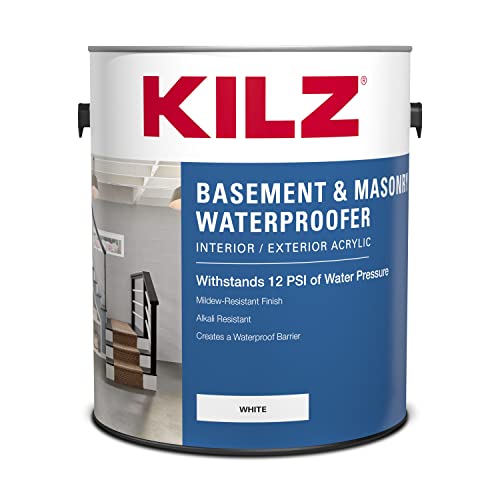
KILZ’s Basement and Masonry Waterproofing Paint is designed to seal porous concrete and masonry surfaces on interior and exterior walls. It uses nanotechnology to form a water-blocking barrier while providing an alkali-resistant coating for durability. It’s intended for properly prepped above- and below-grade basement walls, masonry surfaces, retaining walls, cinder blocks, stucco, and brick. It should not be used on floors or walls with active leaks. Application recommendations include a quality nap roller, brush, or a high-pressure spray system capable of handling 2200-3200 PSI with a .023″–.025″ tip. The coating yields a decorative finish while reducing water infiltration over time.
- Waterproof barrier for porous masonry and concrete
- Alkali-resistant, durable finish
- Suitable for above/below grade walls; not for active leaks
- Recommended tools: roller, brush, or airless sprayer
Liquid Rubber Basement Sealant

Liquid Rubber’s Basement and Foundation Repair Sealant is a flexible coating that forms a permanent waterproof membrane. It’s designed for basement waterproofing, foundation leak repair, and even applications like shower liners and planter boxes. The product notes a 900% elongation, enabling it to move with the substrate and seal active leaks more effectively than traditional sealants. It is compatible with self-leveling concrete and serves as a versatile crack-filler, maintaining adhesion on concrete, masonry, wood, metal, and other foundation surfaces. This makes it a strong option when you face ongoing moisture issues or cracking that requires a durable, flexible seal.
- Permanent flexible waterproof membrane
- High elongation (900%) to accommodate movement
- Seals active leaks and works with self-leveling concrete
- Adheres to multiple surfaces for DIY projects
Ames Block & Wall Liquid Rubber Waterproofer
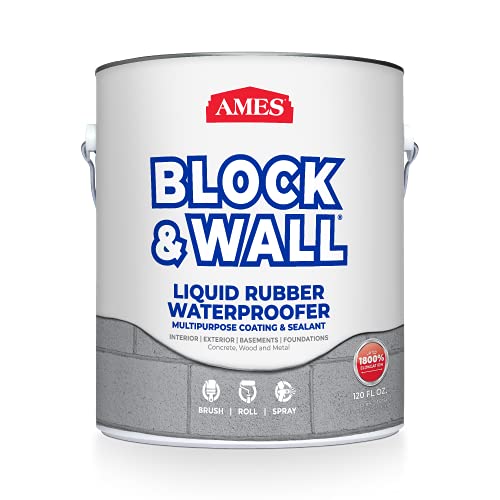
AMES Block & Wall Liquid Rubber Waterproofer is a white, 1-gallon, multi-purpose coating designed for concrete sealing and basement waterproofing. While the listed details highlight item weight (9.25 lb), country of origin (China), and color (White), the product functions as a rubber-based waterproof coating that can bridge small cracks and protect basement and foundation surfaces from moisture ingress. This option suits projects that require a flexible membrane over large wall areas, with a straightforward application and a white finish that can be repainted if desired.
- White multi-purpose liquid rubber coating
- Designed for basements and foundations
- Single-gallon package; relatively lightweight
RadonSeal Plus Deep Penetrating Sealer

RadonSeal Plus is a deep-penetrating concrete sealer designed for basement walls and floors. It penetrates up to four inches, creating a barrier that blocks water, vapor, efflorescence, and radon gas from concrete surfaces. The formula strengthens and preserves concrete, helping it resist dusting, cracking, and damage from salts, de-icing chemicals, and freeze-thaw cycles. It is water-based with zero VOCs, making it an indoor-safe option with no fumes or strong odors. This product is particularly suited to basements where radon or vapor transmission is a concern and where a low-odor, long-lasting seal is desired.
- Deep penetration up to 4 inches
- Blocks water, vapor, efflorescence, and radon gas
- Zero VOCs; water-based and low odor
- Strengthens concrete against freeze-thaw damage
Tapel 3-in-1 Epoxy Floor Coating

Tapel’s 3-in-1 Epoxy Floor Coating combines primer, paint, and a clear coat into a single, fast-drying system designed for concrete surfaces in garages, basements, and warehouses. The product is described as an industrial-grade coating that withstands hot tire pickup, chemical spills, and heavy impacts. It features a matte slip-resistant finish that hides dirt and stays UV-stable for 10+ years, preventing yellowing. While primarily a floor coating, it functions as a protective membrane that helps seal and protect concrete surfaces in basement floors where a durable, easy-to-clean finish is desirable.
- Three-in-one formula: primer, paint, clear coat
- Durable, slip-resistant matte finish
- Resists oils, chemicals, and UV exposure
- Fast-drying with long-lasting color stability
Buying Guide: Key Considerations For Choosing Basement Sealer Paints
When selecting a basement sealer, consider the specific moisture, surface, and usage needs of your space. Below are the main factors to guide your decision, along with practical comparisons for different scenarios.
Surface Type And Condition
Concrete and masonry walls respond differently to coatings than wood or metal. Penetrating sealers (like RadonSeal) are ideal for bare concrete walls and floors, providing long-term moisture barriers without adding a thick film. Paint-on waterproofing coatings (like KILZ) form a surface seal and decorative finish, good for walls that are already stable but need moisture resistance. Flexible membranes (Liquid Rubber, Ames) bridge small cracks and adapt to movement, making them suitable for walls with minor shifting or damp patches.
Water Ingress And Leakage
For active leaks, a flexible, rubberized membrane is often preferable. Liquid Rubber and the Ames rubber-based products handle movement and seepage well. If leaks are not active or are sporadic, a high-quality waterproof paint like KILZ can provide a durable barrier with easier maintenance. RadonSeal adds an extra layer by reducing moisture and radon gas transmission in tandem with traditional barriers.
Penetration Vs. Surface Coat
Penetrating sealers soak into the concrete to block moisture and gases at the source, while surface coatings build a film on the wall or floor. Choose penetrating formulas if you want a low-odor, low-profile solution and plan to repaint or finish later. Surface coatings are beneficial when you want a quick, uniform finish and additional abrasion resistance on floors.
VOC Content And Indoor Air Quality
Low-VOC and zero-VOC products reduce odors and health concerns in occupied basements. RadonSeal is explicitly zero VOC, making it attractive for indoor spaces with ventilation limitations. Always check the product label for VOC levels and curing times before applying in finished basements or living spaces.
Finish, Color, And Maintenance
Consider the desired aesthetics and maintenance needs. Epoxy floor coatings like Tapel offer durable, non-slip finishes ideal for garage-style basements but may require more preparation. Paints such as KILZ deliver a clean look with a moisture barrier, while rubber membranes (Liquid Rubber, Ames) emphasize durability and crack-bridging properties. Aesthetics aside, prioritize a finish that resists mildew, staining, and easier cleaning for basement environments.
Application And Drying Time
Application methods vary—from rollers and brushes for paints to spray equipment for membranes. Drying and cure times influence when your basement becomes usable again. Follow manufacturer guidance for surface prep, priming, and ventilation. For busy spaces, choose products with shorter curing times or simpler application steps.
Warranty, Safety, And Longevity
warranties and long-term performance depend on surface preparation and environmental conditions. Look for products with documented performance for basement applications and low health risks. For damp or hydrostatic pressure issues, consult a professional if you’re unsure about the right solution or combination of products for your specific basement conditions.